
by Maria Olivia H. Tripon
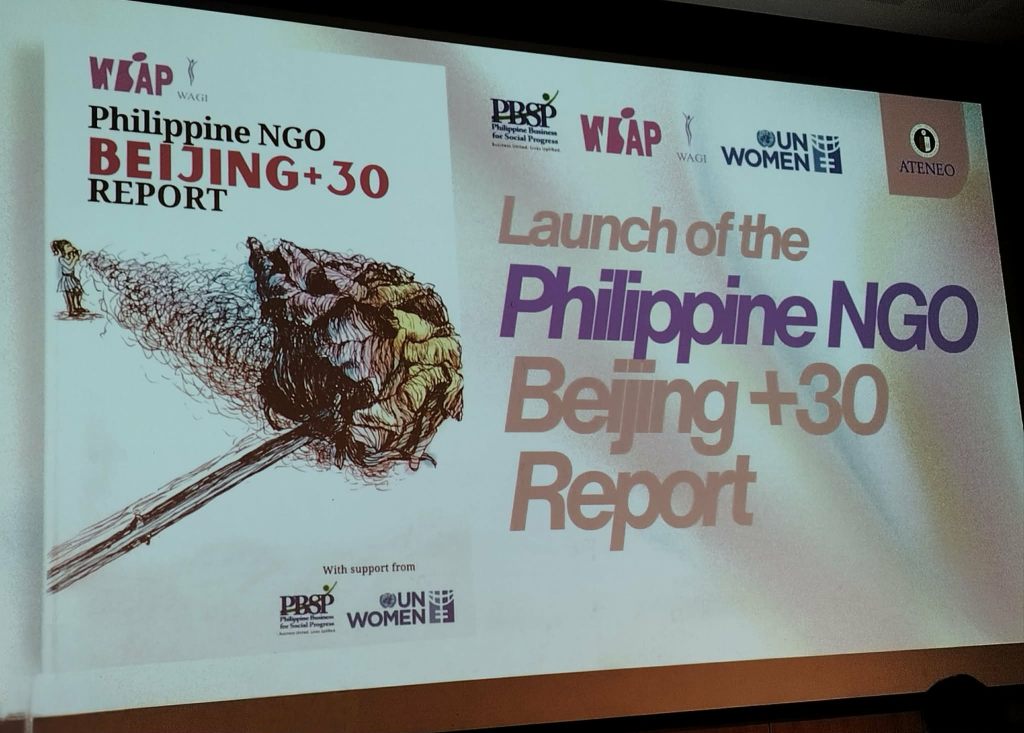
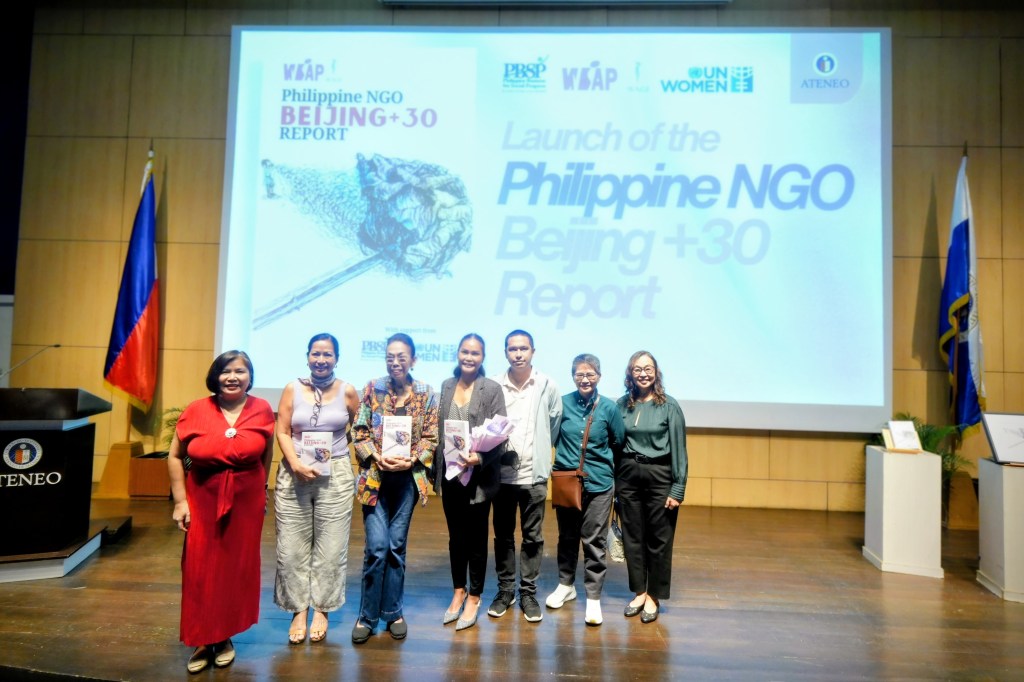
The recent launch of “The Philippine NGO Beijing+30 Report” at the Loyola Heights campus of the Ateneo de Manila University (ADMU) on November 17, 2025 was a reunion of sorts. It was a significant intergenerational gathering of feminists in their 80s to millennials, with a student audience in their 20s, who were not born when the Fourth World Conference on Women (FWCW) was held in Beijing 30 years ago, in 1995.
With the theme “equality, development and peace,” the FWCW was the largest UN conference with more than 40,000 women attending both the intergovernmental meeting in Beijing and the NGO Forum in Huairou, China. The Beijing Platform for Action (BPfA) are the 12 areas of concern then identified by women from all over the world. Every five years, the UN Commission on the Status of Women (CSW) reviews how the 189 countries who signed the BPfA, implemented these. Even then, the non-governmental organizations (NGOs) insisted on doing their own parallel report since governments tended to downplay the gaps in implementation.

This report starts from 2020, where the “Beijing+25” report left off. Each organization looks at the goals of a specific area of concern in the lives of women – the gaps and challenges, government and NGO initiatives and recommendations.
Patricia Licuanan, keynote speaker, provided the institutional memory of what is now called The Women’s Conference. As the Chair of the Main Committee, she expertly handled the many diverse positions to reach a consensus and finalize the Beijing document into the early morning hours of the last day of the conference. It helped that she was CSW chair two years prior to the conference. “The unique feature … was the long and complex consultative process… with meetings at country and regional levels. The 12 critical areas reflected concerns common to all or most regions,” Licuanan said.
The Philippine NGO Beijing+30 Report was published by the Women’s Studies Association of the Philippines (WSAP) and the Women and Gender Institute (WAGI) of Miriam College, with support from Philippine Business for Social Progress (PBSP) and UN Women Philippines. Note that the lives of women depend on government policies as well as global and local circumstances such as the pandemic, climate change, etc. which provided the context of the report. Edited by Jeanne Frances Illo and written by NGO advocates, the first 12 chapters correspond to the original critical areas of concern namely:
- Women and poverty
- Education and training of women
- Women and health
- Violence against women
- Women and armed conflict
- Women and the economy
- Women in power and decision making
- Institutional mechanisms
- Human rights of women
- Women and media
- Women and the environment
- The girl child.
Additional chapters delved on emerging issues such as Women of diverse SOGIESC*, Intersection of age and gender: the disempowerment of the aging women, Muslim women in Mindanao, and Indigenous women.
There were also regional consultations to augment the report. Recommendations from the ground are: to address mental health issues, set up women’s hubs for coalition and capacity building, and create an app for emergency response and coordinated action to violence against women.
“Thirty years later, the platform for action remains far from being implemented,” Licuanan said as she urged the “revival of the spirit of Beijing, a recommitment to the BPfA which is both a landmark and a living document – the most progressive and comprehensive global blueprint for women’s rights and empowerment.”
Hosted by the ADMU Gender and Development Office and the Dr. Rosita G. Leong School of Social Sciences, the launch on November 17, 2025 featured short videos of the authors’ key messages and hopes for the next five years. The event took time to honor Elizabeth Angsioco, one of the authors who passed away. She was a fierce advocate of women’s rights and headed the Democratic Socialist Women of the Philippines (DSWP). Her son and daughter were present at the launch.
It was a passing of the torch so to speak from Beijing veterans to younger feminists who now lead the many organizations that made this report. Aside from Licuanan are feminist seniors who also helped write some of the chapters: Aurora de Dios, former member of the UN CEDAW** committee and rapporteur, Princess Nemenzo (WomanHealth Philippines), Rosalinda Ofreneo (Homenet Philippines), Karen Tanada (GZO Peace Institute), Socorro Reyes – Center for Legislative Development (CLD), Yasmin Busran Lao (NISA UL-HAQQ) and this writer.
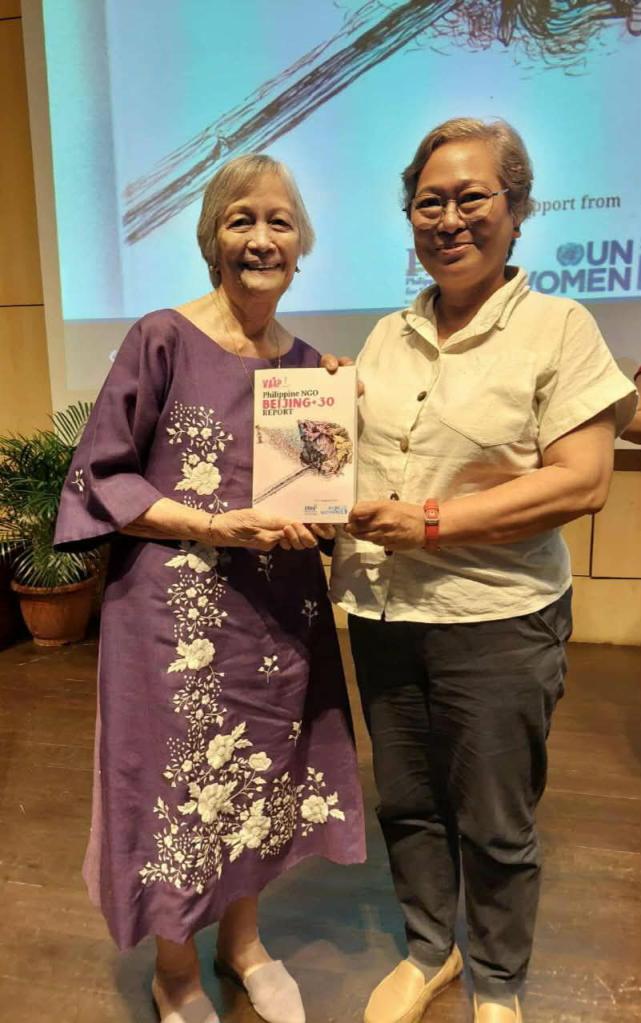
Some of the younger feminist authors are Excelsa Tongson- (WSAP) Melanie Reyes (WAGI), Jelen Paclarin- Women’s Legal Bureau (WLB), Jean Enriquez – Coalition against Trafficking of Women in Asia Pacific (CATWAP), Liza Garcia- Foundation for Media Alternatives (FMA), Luz Frances Chua (Catholics for RH) and Maria Elissa Lao of ADMU.
In the last chapter of the report, Licuanan shares some of the themes from the side events of the CSW in New York last March 2025: “a re-politicized feminist agenda which involves dismantling systems of oppression, a feminist foreign policy that challenges a masculinist notion of leadership, inter-movement solidarity that recognizes the interconnectedness of the struggle, and intergenerational feminism.”
Indeed it is fitting that one of the cross-cutting themes of this report is intergenerational equality. The launch of the Philippine NGO Report shows that the feminist movement in the country is alive and well, with a new generation ready to bring the Beijing blueprint to the next level and make a better world for women.
______________
*Sexual Orientation Gender Identity/Expression and Sex Characteristic
**Convention on the Elimination of all kinds of Discrimination Against Women (CEDAW) an international treaty on the rights of women ratified by the Philippines in 1981 and the basis of the Magna Carta of Women of the Philippines.
Photo credit: June Vasquez of the Ateneo marketing and communications office.
 Women Writing Women