
By Women Writing Women
Yesterday, we learned the sad news that Lina, the brilliant poet and writer, succumbed to cardiac arrest at a hospital in Cagayan de Oro City. We, Women Writing Women (and Women’s Feature Service) remember Lina as sister, her genius, our ferris-wheel friendships, her feminisms and struggles, and how she wove all these in writings as fierce and brave and in her sister, Yvette’s words: “fragile.”

Diosa Labiste:
Lina is a dear friend, and our writing paths crisscrossed in the choices that we made – journalism, feminism, national democratic struggle, friendships we sealed, and food.
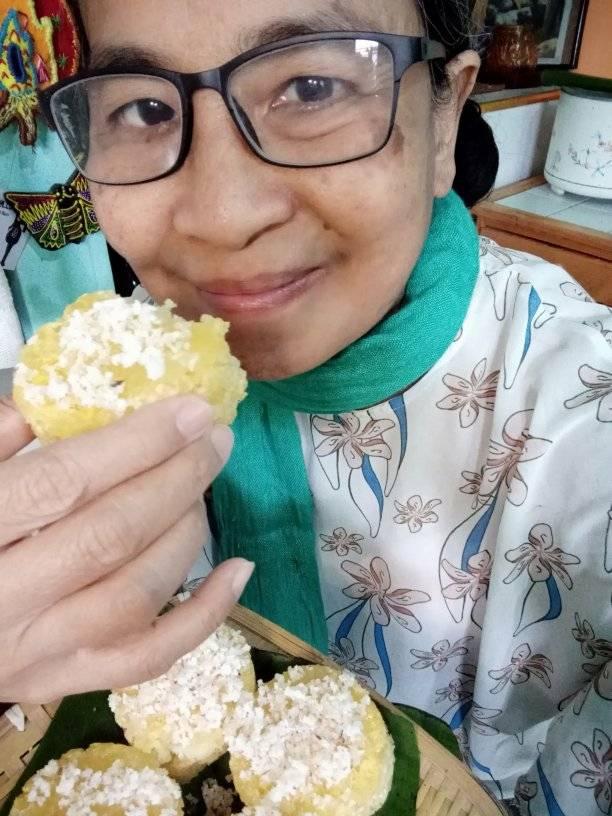
Just before she brought herself to the hospital, she told me over Messenger that she lost her appetite. I said soup is an elixir to bring it back, so I suggested munggo, lentils, and the tried and tested Visayan fish soup, tinola/tinowa. Shortly after, she was posting photos of Palestinian food–yellow, perhaps pungent, and glistening with generous splashes of olive oil. I wish I were around to cook and plead that she takes a spoonful because she was visibly wasting away.
When she was in the ER, I asked if she had eaten. She said, lugaw lang ang ila ginhatag. I digitally transferred cash for food delivery because she might be craving for curry or halang-halang (spicy coconut chicken soup, famous in Bohol). In the evening, I asked if she had supper and she sent a photo of rice, steamed vegetables, and tuna paksiw. I replied that the meal is best eaten kinamot style. Indeed, she did that–“I tried kaganiha sa lunch. Walay sink where I can wash my hands. Humot paksiw [a]Kong kamot.”
“Why the hell didn’t they give you a spoon and fork? lol”
“No, I improvised after the nurse left.”
That was the end of the thread and our last conversation.
The last story she published in Women Writing Women blog is about a dish of mud crab cooked in thick coconut milk. It was supposed to be a story about how a fishing community received the news of the declaration of martial law in September 1972 by the dictator Ferdinand Marcos Sr. However, the narrative was less about politics and more about the fate of a one-eyed kagang. I will take it as a national allegory whose meanings I am left to parse.
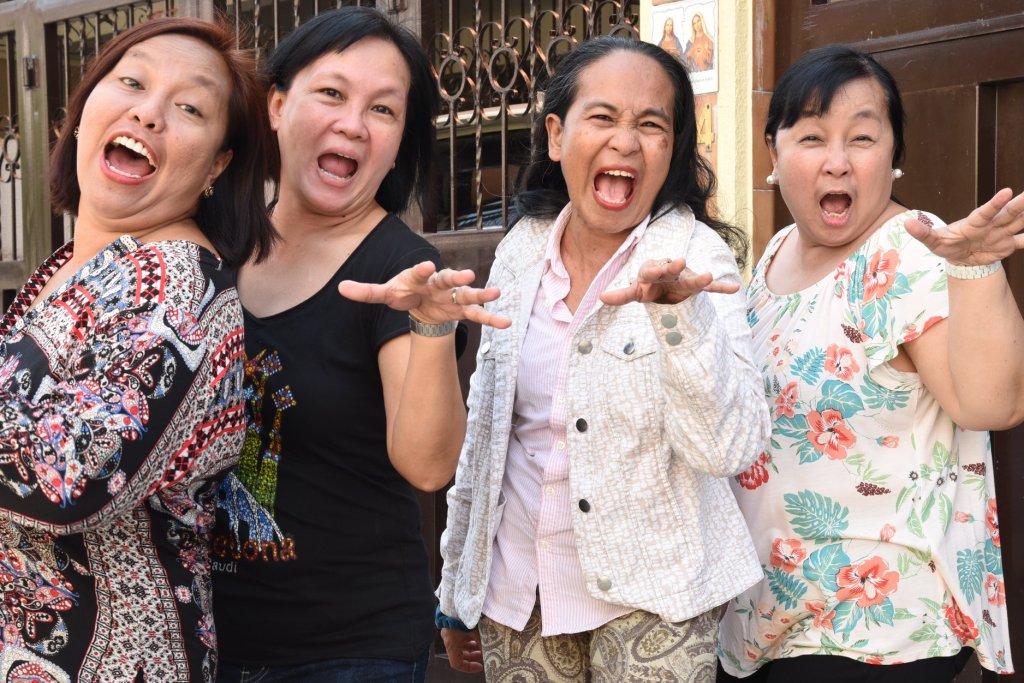
Photo credit with caption (edited): Mandy Navasero, from Lina’s Facebook
Pinky Serafica:
I met Lina at the tail of a daydream. She was on one end of the passage near the College Canteen in La Salle-Taft, oblivious. And I was already near the old library going to the pebble wash, also oblivious. The tinkling of many bells stopped me from daydream-walking and I looked behind to see this short-haired woman, in malong and with tens of T’boli-made bells and bracelets around her ankles and arms, gliding. She looked at me, and we only just then realized that we were the only ones moving in the sea of students and faculty who stopped activity and chatter to listen to the prayer broadcast. We knew the unwritten protocol, but we still walked, and continued moving to catch where we left off in our respective daydreams.
I told writers in Malate Literary Journal (called Folio now) about the woman-who-also-didn’t-stop, and one of our advisers, Chari Cruz-Lucero said, “You just met Lina Sagaral Reyes.”
Writer circles, especially feminist ones, were small at that time, and we’d meet again after college in Women’s Feature Service, in CDO, and in many shared advocacies. I would hear about Lina fighting, on many fronts–versus writers who disrespected, plagiarized and who preyed on other writers, against her own health issues, and on the battleground of mental peaks and depths. She made innumerable friends just as she also alienated many because maybe with Lina, there were always many shades of gray, many tones of white, many tints of black.
Everytime she submitted a journalistic piece for Women Writing Women, I’d ask about her poetry because that is her home, and she’d say there were many but they were raw, unfinished. In the emergency room where she rushed herself some days ago, Lina messaged that the doctors were just waiting for the results of her blood and sputum culture, and another xray. And I asked, so when will you be discharged, and she didn’t answer anymore. It was difficult to write this because how do we write about you, Lina? Thank you for you, sis, and your friendship and life reminder that we are raw, messy, unfinished, vulnerable, sometimes brave. Rest your wand, now, dear girl.
Diana Mendoza:
I prepared for my next meeting with Lina in a media seminar on health reporting last November in CDO where I was scheduled to speak as a media resource person. But schedules went awry and I instead attended a media training overseas. Lina said she backed out of the event, anyway, because she had medical check-ups. It should have been a reunion from many years ago, after 2016 when we saw each other in the Lopez Jaena Community Journalism Workshop of UP Masscom. My chances of seeing Lina have been few and far between ever since we had general assemblies and meetings of women writers of the Women’s Feature Service, when I always saw her as a priestess of creative writing, with her signature shawl. But what I admired about Lina more was her steadfast resolve to tell younger journalists of the need to stick to the tenets of honest journalism despite the changing world of technology and communication. I share your stance, Lina, and will keep that in mind when I mentor the next journalists. Wear your shawl as you rest happily and peacefully.

Chi Laigo Vallido:
Oh Lina! We were supposed to meet in CDO last October during our training but I couldn’t travel much since my husband had a stroke. We were both excited to finally meet. Even when we know that times were hard for you and for all of us during the pandemic, you still volunteered to write for Women Writing Women. You told me that if walang funds, “Okay lang. Passion project ang Women Writing Women. Labor of love and our group is love.” You do not pursue a story to write. You write because there’s a story that needs to be told. This is something that we will cherish and we will constantly remind ourselves. Salamat at paalam.

Olive Tripon:
Dear Lina, You introduced me to the “witches” of De La Salle Taft. We had meetings there and I was bewitched by the sorcery of words. Our poetry exchanges led you to link me (albeit only as an observer) with gurus of Silliman in Dumaguete. For this, I will forever be grateful for meeting the Tiempos, Merlie Alunan, and Marj Evasco, who became a Women Feature Service (WFS) member of the board. I often talked about your stories in trainings and WFS events – betamax as a family planning tool or women who bled in “uncharitable wards.” Thank you for the stories. Now I’m curious about your “raw” poems. WWW

 Women Writing Women