
By Pinky Serafica
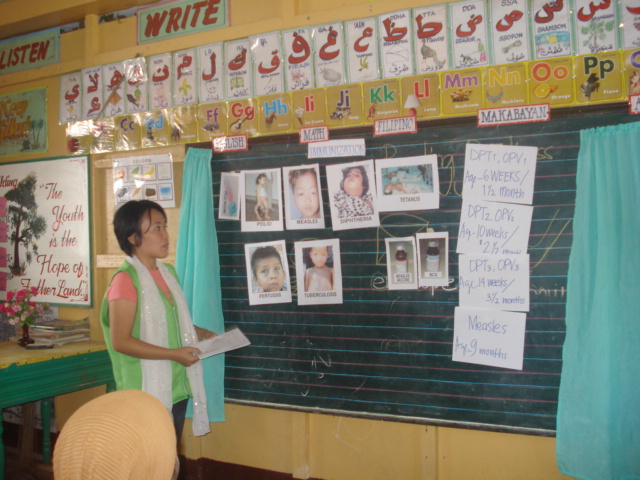
In 2011, six years before they would be forced to flee Marawi in Mindanao, southern Philippines, health volunteers trained by Helen Keller International Philippines gathered some 20 Meranao mothers with young children. While a few volunteers babysat the kids, others facilitated a Tumpukan Na! behavior change action session for parents.
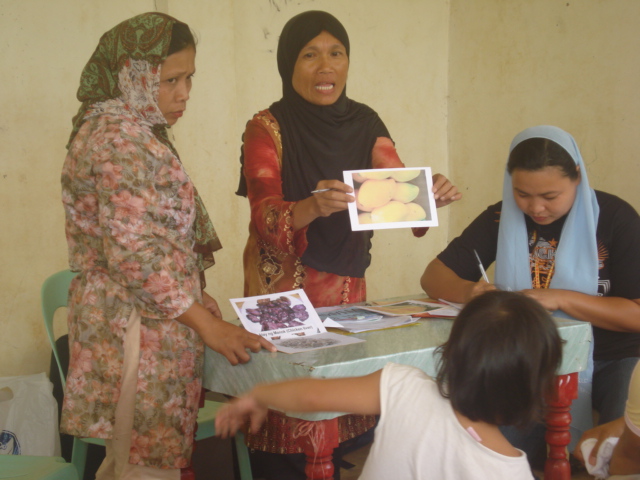
On the floor before them were pictures of a breastfeeding mother, cooked rice, am (rice water), a spoonful of honey, water in a milk bottle, and fruits—mashed banana, papaya cut in small pieces, and a half cheek of a ripe mango.
The mothers were asked, “what will you feed your babies, newborn to six months old?” The instructions were: pick the pictures of the appropriate “food” to feed a newborn, a four-month old, a six- month old and a year-old toddler.
For the newborn, only two picked up photos of a breastfeeding mother. Majority chose photos of a milk bottle containing water, the breastfeeding mother–and honey.

Tumpukan Na! behavior change action sessions on child health
A nutritionist with decades of experience in public health, Dolly Reario, Country Director of Helen Keller International Philippines observed that, “Giving newborns honey is prevalent in the BARMM.”
Speaking in her personal capacity, she said, “this makes the threat of botulism constant and real. This is why the SHIELD project trained community volunteers or CHATs so villagers themselves can solve risky behaviors.”
Helen Keller Philippines was one of the four non-governmental organization (NGOs) that implemented the USAID-supported project, Sustainable Health Improvement through Empowerment and Local Development (SHIELD) in the Autonomous Region in Muslim Mindanao (ARMM, currently called BARMM or Bangsamoro Autonomous Region in Muslim Mindanao) from 2006 to 2012.
Helen Keller Philippines covered Lanao del Sur and Marawi, ACDI/VOCA—Maguindanao and Tawi-Tawi, Save the Children operated in Sulu, and Child Health International—in Basilan.
Helen Keller Philippines organized Community Health Action Team (CHATs) in Marawi to engage communities for health education and behavior change. It was the members of Marawi CHATs that flagged the practice of tahnik—rubbing sweets, often honey or dates to the palate of newborns—as prevalent among Islamic communities. Families believe that honey, which is more available locally than dates, will give children a sweeter temperament.
Part of the work of CHATs is to warn mothers of honey-based infant botulism, a serious illness caused by a toxin in honey that attacks the baby’s nerves causing paralysis and even death.


A CHAT member, herself a Meranao who was exposed to the practice of tahnik growing up, said the community identified it as one of the behavioral barriers to exclusive breastfeeding. When she delivered her eldest, her mother-in-law pressured her to give her newborn honey before she could even breastfeed. Even when she knew better after the CHATs’ training, she still felt guilty for not adhering to what she believed was a cultural duty.
“Personally, I saw that it is very difficult to totally remove a practice that had been passed down from generations,” says Reario, observing that Meranao families automatically give honey as prelacteal feed.
Through CHATs’ conduct of Tumpukan Na! behavior change sessions, health volunteers negotiated with parents whether there is a way to still use honey but ensure that it is out of reach of the newborns’ exploring tongue and fingers. The mothers came up with the idea of dabbing a bit of honey on the lower chin of babies to remove their anxiety of not being able to fulfill a cultural practice, but still keep the newborns safe.
And once that barrier is removed, Reario says, “they are then better able to promote and reinforce exclusive breastfeeding, and emphasize that especially in the first six months of a baby’s life, breastmilk is enough—there is no need for water or am.”

The SHIELD project helped increase access to family planning, maternal and child health education and services. Behavior Change Communication (BCC) is one of the project’s components where interactive communication processes and approaches are used to promote positive behavior among individuals, groups and communities fitting their social, cultural and political conditions. To sustain and reinforce behavior changes, BCC was integrated in the other SHIELD components—health systems strengthening, local governance and enforcement, and community participation.
The cover of its final report, “you were made for (these) difficult times” paraphrasing from Clarissa Pinkola Estes’ essay, “You were made for this,” summarizes the complexity of working in the BARMM.
Many of the lessons generated from SHIELD’s work are still being used to this day.
Lesson 1: Communities know who needs services most
In personal hindsight, Reario says, “strategies that have worked were culturally and socially sensitive, had the support of communities, and integrated Islamic values and teachings.” This integration is critical, she says, because in the BARRM, traditional modes of healing had to be considered and balanced with contemporary preventive and curative health care.
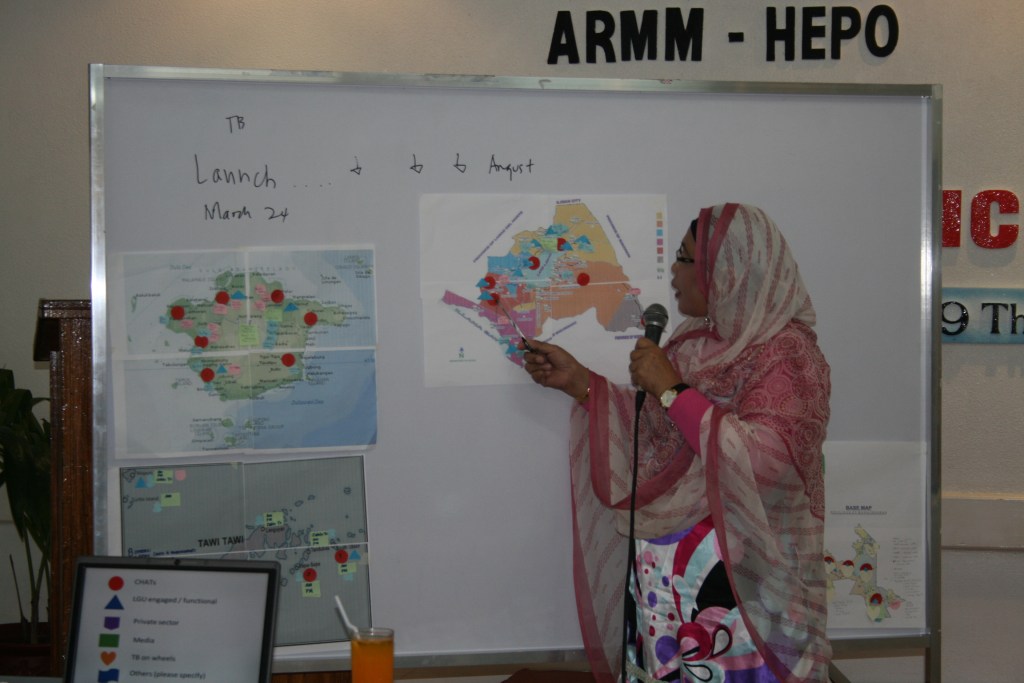
With SHIELD’s technical assistance, the BARMM Health Department and local government units mass hired, trained and deployed 493 new midwives substantially improving the health provider-to-population ratio. To further augment the limited health workforce, 3,886 CHATs were trained and mobilized in 526 villages.
In 2006, the unmet need for family planning services in the BARMM was highest in the country at 55.8 percent (National Demographic Health Survey). This meant that many couples who expressly wanted family planning services did not receive any. CHATs were instrumental in finding and masterlisting who these couples were, having basic, interactive information-exchanges, and linking them to counseling and actual services.
Lesson 2: Behavior Change Communication is optimized if there are actual services provided
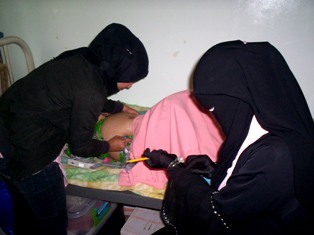
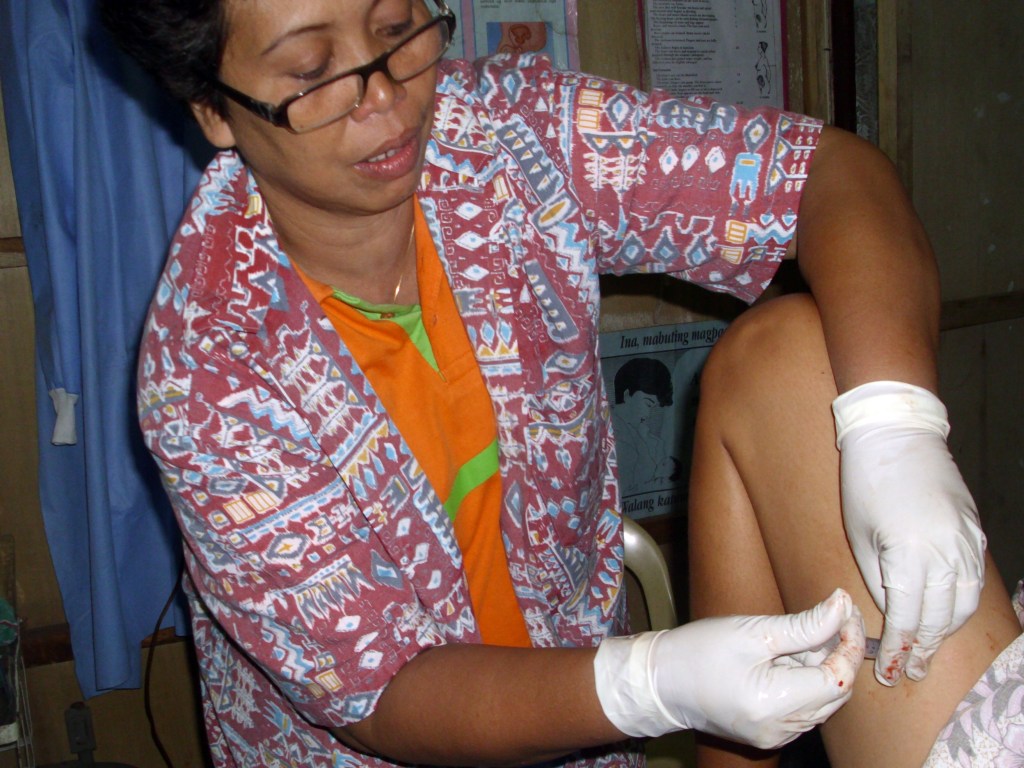
Mothers who attended a Tumpukan Na! behavior change session on family planning asked Elena Falle, a CHAT member who was also then a barangay official in barangay Pagalongan, Wao, Lanao del Sur about “pa-tali.” The mother who had 6 children and whose youngest was two years old at that time, was referring to bilateral tubal ligation (BTL) which in lay terms involves the tying of a woman’s tubes, and thus “pa-tali” (tying), a permanent family planning method.
After the Tumpukan Na!, Falle immediately referred the mother and others who also expressed interest in BTL to a midwife in one of Wao’s rural health units for intensive counseling. The mother was scheduled for BTL the week after but the other women wanted time to consult with an imam fearing that permanent family planning methods were haram (forbidden) in Islam despite the declaration of local and national “fatwah” (religious edict) clarifying that FP is allowed in Islam.
The imam was himself one of the 94 Muslim Religious Leaders who were members of CHATs. Aside from being resource persons during Tumpukan Na! family planning sessions or personally talking with the mothers, the imam is also a regular guest in Wao’s thrice-weekly health radio program, “Oras Pangkalusugan,” which Helen Keller International, through the SHIELD project, supported.


SHIELD also trained 17 officers of the Bantay Ranao Assistance Islamic Network (BRAIN), an association of two-way radio owners, and together, created “Tompokan sa Kawang” (partnership on the air) linking radio-owning households with the Balindong Municipal Hospital and the local government, both of which have two-way radio bases. The BRAIN members integrated family planning conversations during their nightly interactive discussions.
BRAIN extensively announced schedules for BTL or other family planning and maternal and child health services to widen the reach for those who need them.
Reario says, “it cannot be business-as-usual in BARMM.” Helen Keller Philippines worked to strengthen the health system ensuring that all family planning services, consistent with needs and beliefs, are available.
“But Helen Keller didn’t stop there,” Reario emphasizes the crucial continuum of care. “With CHATs and health providers, we identified those needing services most, responded to their barriers together, and negotiated with them to seek family planning services. And then we scheduled them for those services.”

Lesson 3: Partnerships among communities, local governments, and NGOs with international development support can provide health services where they are needed most
There were even cases when CHATs had to request local governments for transportation, food and lodging especially those from remote areas in Lanao del Sur where logistical barriers prevented family planning expressed needs from being met. And even sometimes, as it is in traditionally caring communities, CHAT members provide post-care support, mobilizing family members and neighbors to pitch in while mothers, as well as fathers, recover from safe deliveries or from permanent family planning methods. WWW
 Women Writing Women