
By Pinky Serafica
Growing up, maternal stories about Taal town and Taal Lake kept changing.
Mom and her late inay’s memories sometimes matched the legend: their ancestors survived the curse that submerged the original Taal lakeside town, and turned rich but selfish villagers into the colorful fish wearing gold jewelry said to be haunting the murky depths of the lake. Fisherfolk, they told me, would still fleetingly see church spires and the ghost town when they peered down, or catch weird fish that looked like they had makeup on.
In other times, storytelling had more scientific and historical ingredients: our Agila (my grandma’s surname) forebears migrated from what used to be the old Taal town that sunk after violent volcanic eruptions disrupted a river channel and created the Taal lake we know now. The villagers collectively fled and settled into where the present-day Taal is now—more than ten kilometers from the lake—packing with them their old town’s name, Taal.
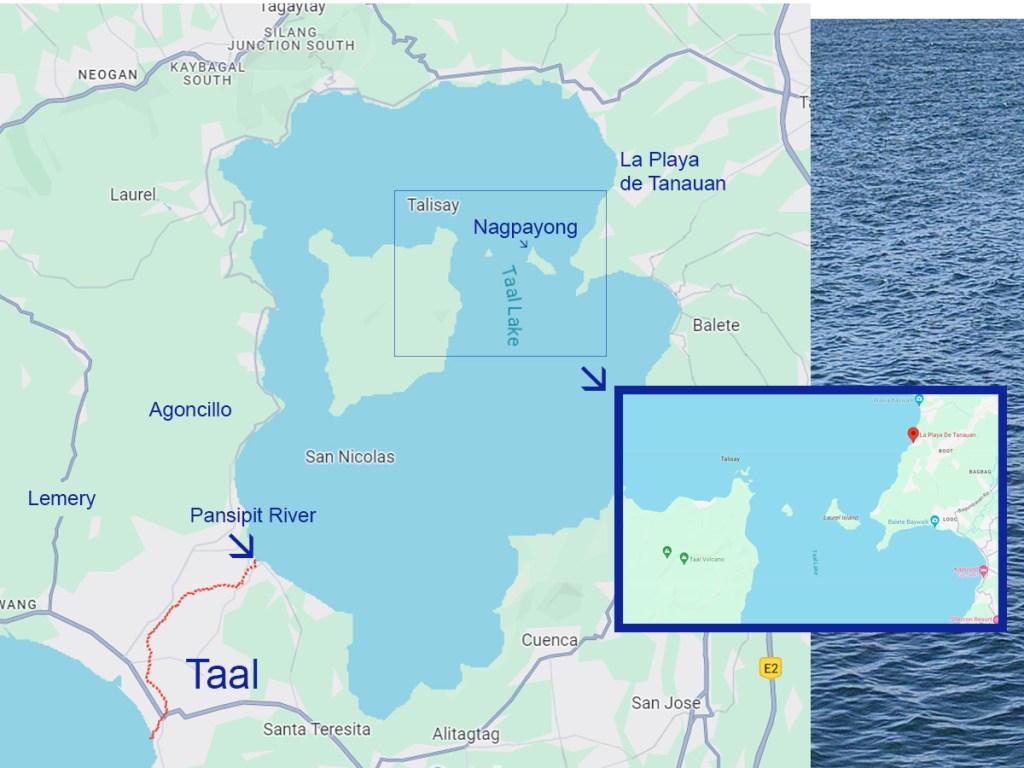
Mom and her late brother, Tito Boy, used to bring us city kids for picnics along the Pansipit River, the only portal left connecting freshwater Taal Lake to the salty Balayan sea, and said the family was “taal sa lugar” or true to the place.
She preferred the relative safety of deep Butong beach in neighboring Lemery town than us swimming at the Agoncillo or San Nicolas sides of Taal Lake where there were forests of seagrass, the favorite hangout of the black and white striped Taal Lake Sea Snake, venomous and now vulnerable, one of only two true freshwater sea snakes in the world.
Paddling in the wind
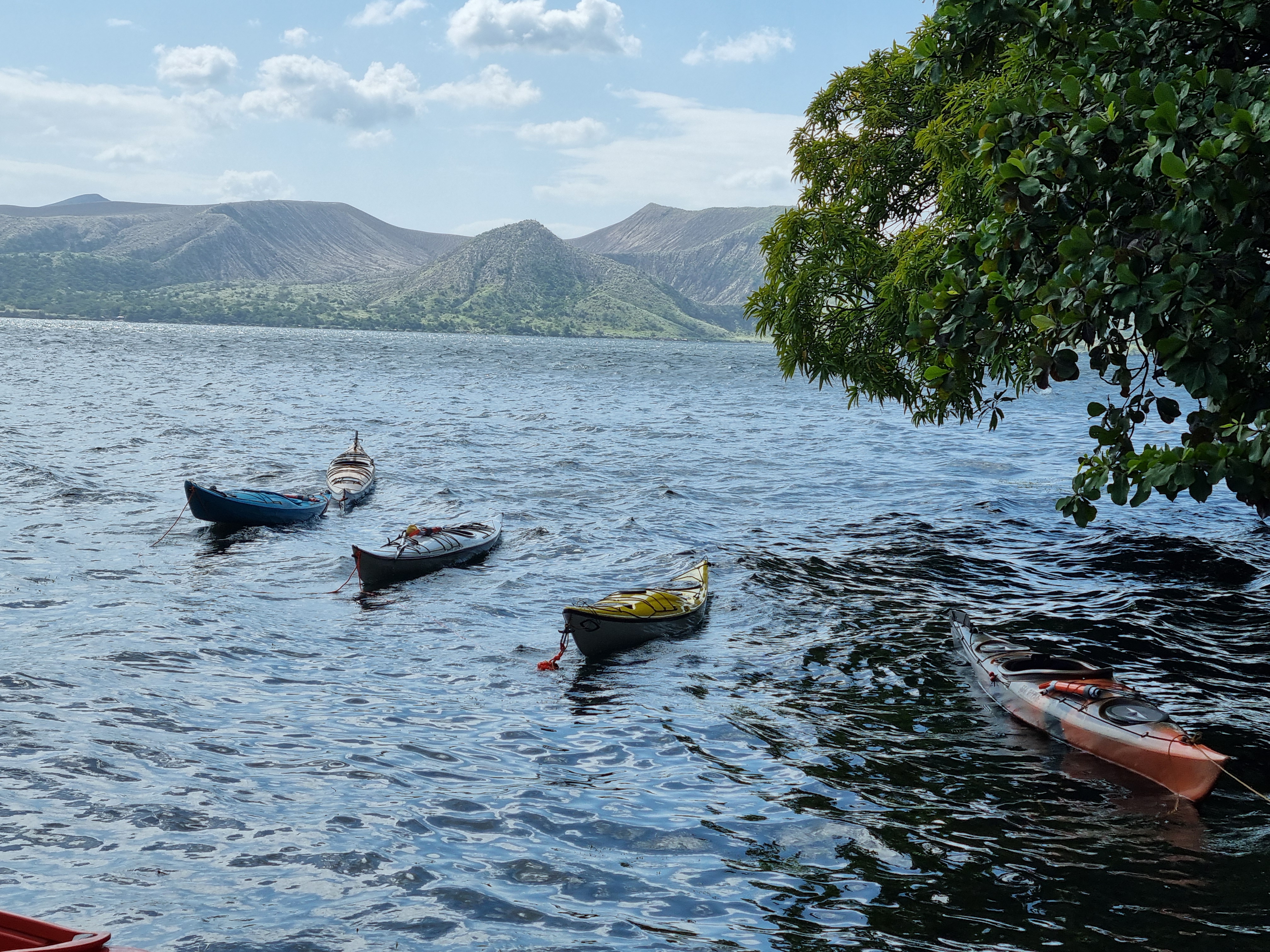
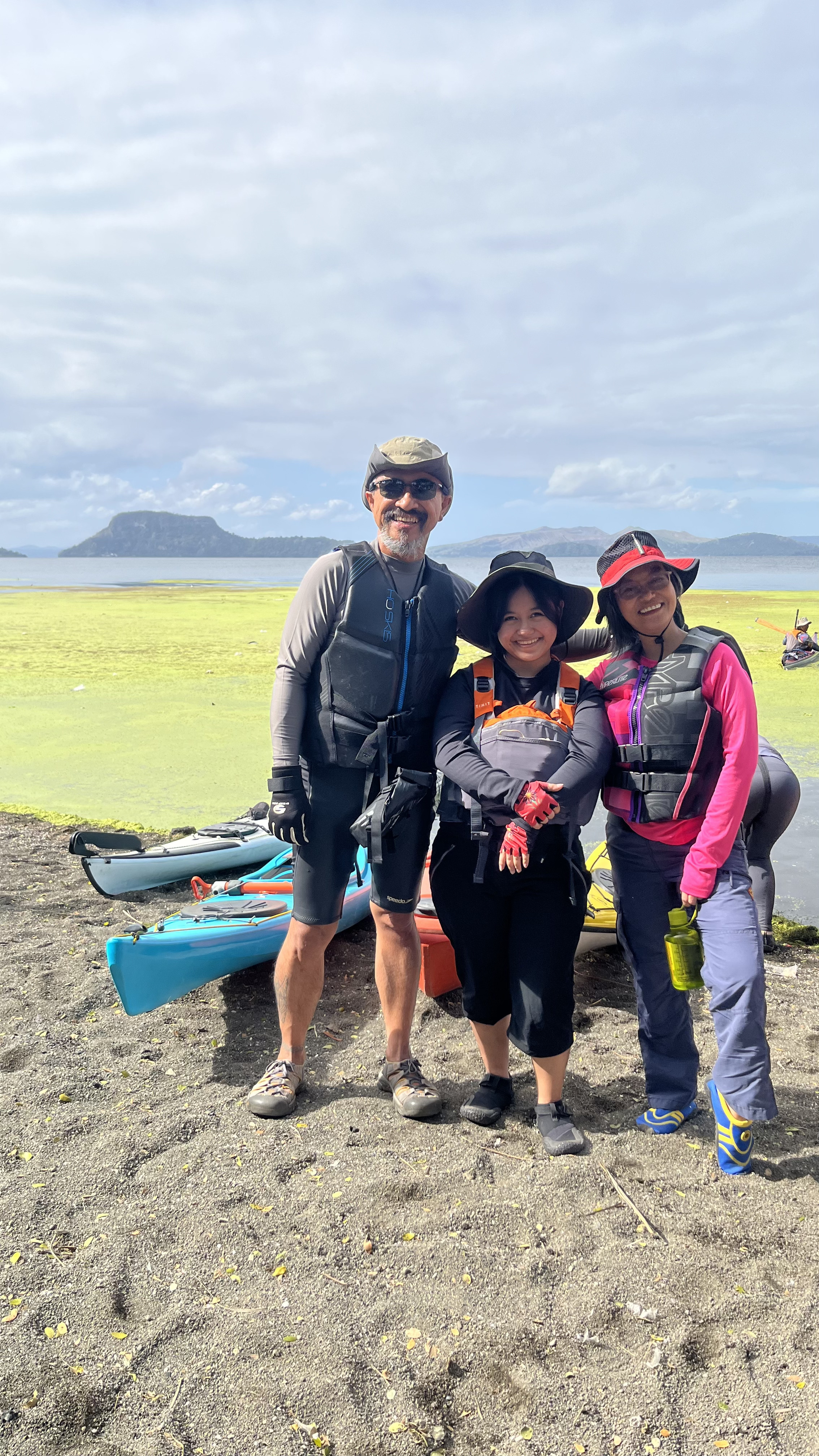
Before January ended, when most city folk wanted to just sleep their chilly Sunday off and then have a slow wake-up with strong coffee, my little family went back to maternal roots to kayak in windy Taal Lake with Harvey Tapan and his Kayak Philippines team.
We met some other 16 paddlers at the edge of the lake, and took off from La Playa de Tanauan, paddled nine kilometers to Nagpayong or Laurel Island where we had lunch in an abandoned resort across the main crater island.
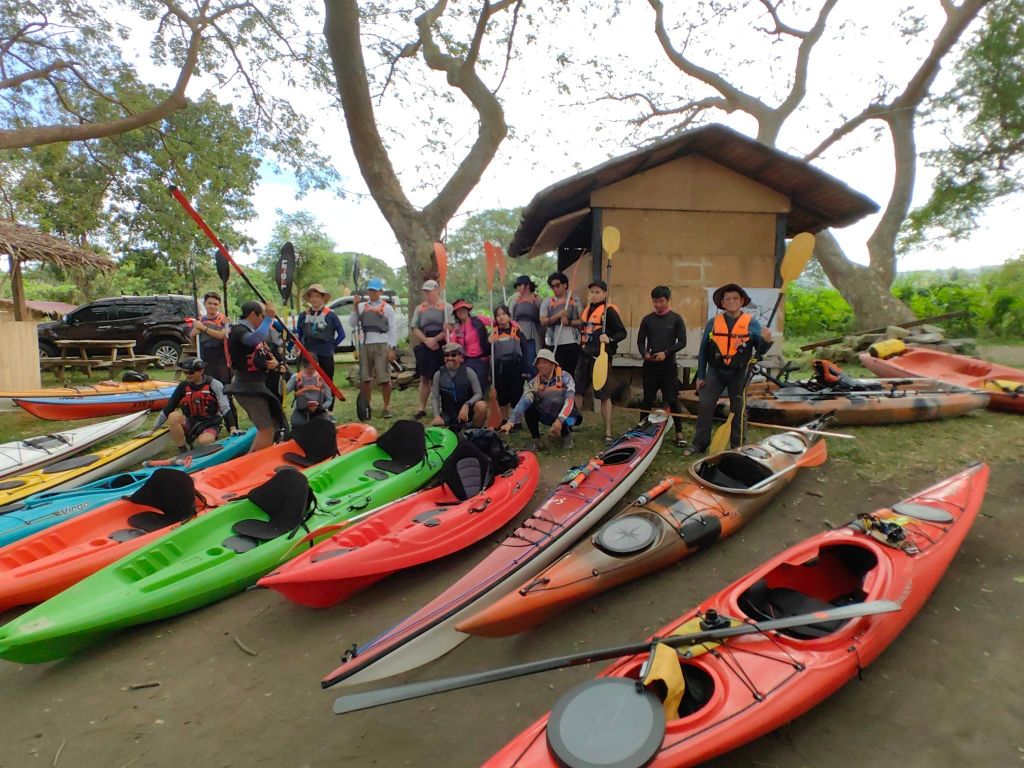
Photo: Armando Lee (Facebook page)
We were not “newbs,” and it was not our first time to paddle in the lake, but we broke ceiling in using kayaks as a legit form of transport to reach another island across a body of rough water. And it was not a neutral lake, but deep web-kind with mysteries and moods that change every time the volcano decides to sneeze.
Though we stayed close to the coast, there were the amihan headwinds, rogue waves and a channel that not only had a strong current, but was a busy intersection for many other watercraft—all of them motorized, creating many boat wakes coming from opposing directions.
Lake lessons
Before paddling, we had a mini lesson of sorts from seasoned inter-island sea kayakers, Rene Llames, Eli Napolitano, Jun Bertulfo, and Harvey.
The first lesson was about rhythm. The second was about flow. The third was about fear, and the fourth, community.
Rhythm. Kayaks are propelled by a single double-bladed paddle that is moved left to right in continuing rhythmical strokes. One forward stroke to the left too much makes the boat heave to the right. Too much on the right and the boat goes left. This is where maintaining rhythm is critical in keeping balance, going forward or reversing, turning, and pausing.
“It’s the core that should move,” Rene Llames reminded us, “or your arms will tire easily. Use your core.”
When tatay and inay (mom’s parents) passed away and the ancestral house deteriorated to its present sorry state, my connection to that core, Taal, slowly loosened. Thankfully, my matrilineal memories gifted me with rhythm to sustain life strokes. And I do have core Taal stories for bequeathing to my daughter, Sky although guiltily, they weren’t enough to cultivate a stronger living connection to blood and place.
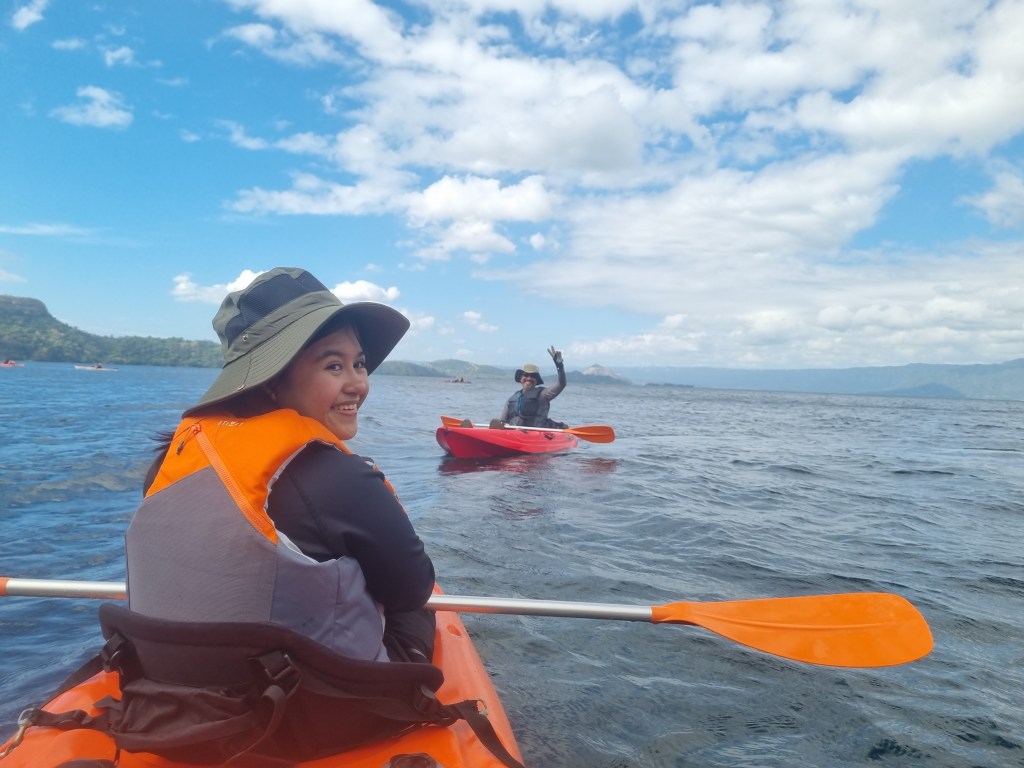
Flow. Rene and Harvey on their sleek kayaks, flowed. They wielded shorter paddles as if these were arms, and their whole body moved with the boat that it was nearly impossible to tell where humans began and kayaks ended.
“You brace with your knees to give you traction. You move like this, and you become one with the boat,” on land, Rene demonstrated slightly rocking side-to-side to absorb the lake’s perpetual motion.
I can see Taal family dramas ripple before the energy accelerates into swells. In the water, you cannot fully brake. One movement earns a reaction. Analogous to the times that I carried on when I learned that my maternal side of the family produces teleseryes with plots of land and property claims, entitlements, and donor fatigue, I lift the paddle over my head and rely on momentum and my neutral buoyancy to keep flow and balance. I am in stillness even if the kayak is tossing.

Photos: Sky Serafica
Fear. In a kayak, I mate with water. From afar, the optics of water being flat or one-dimensional make up the stuff of safety pillows. It is easier to handle a natural fear of lake water if there is a semblance of calm on the surface. But when surface breaks to show the real face of water, there is current there, church spires and fish with jewelry, a ghost town, seagrass, and there are snakes.
And what do we do when the water is rough, Rene asked then answered, “we lean into the waves.”
Human instincts are pretty clear about either avoiding waves altogether or riding them. In a kayak when there are headwinds like those in Taal Lake, paddling into and across waves can induce ancient fears, and the safest way is getting body and boat to steer forward.
“Steer forward!” Harvey called out, “fully submerge the paddle with every stroke.”
The boat broaching or turning sideways requires leaning into the wave. With my every leaning, I name the wave with every fear in my head. And I don’t just dip the tip of the paddle, I don’t just wade, I immerse. I submerged the paddle fully to propel the kayak forward, or in any direction I wanted.
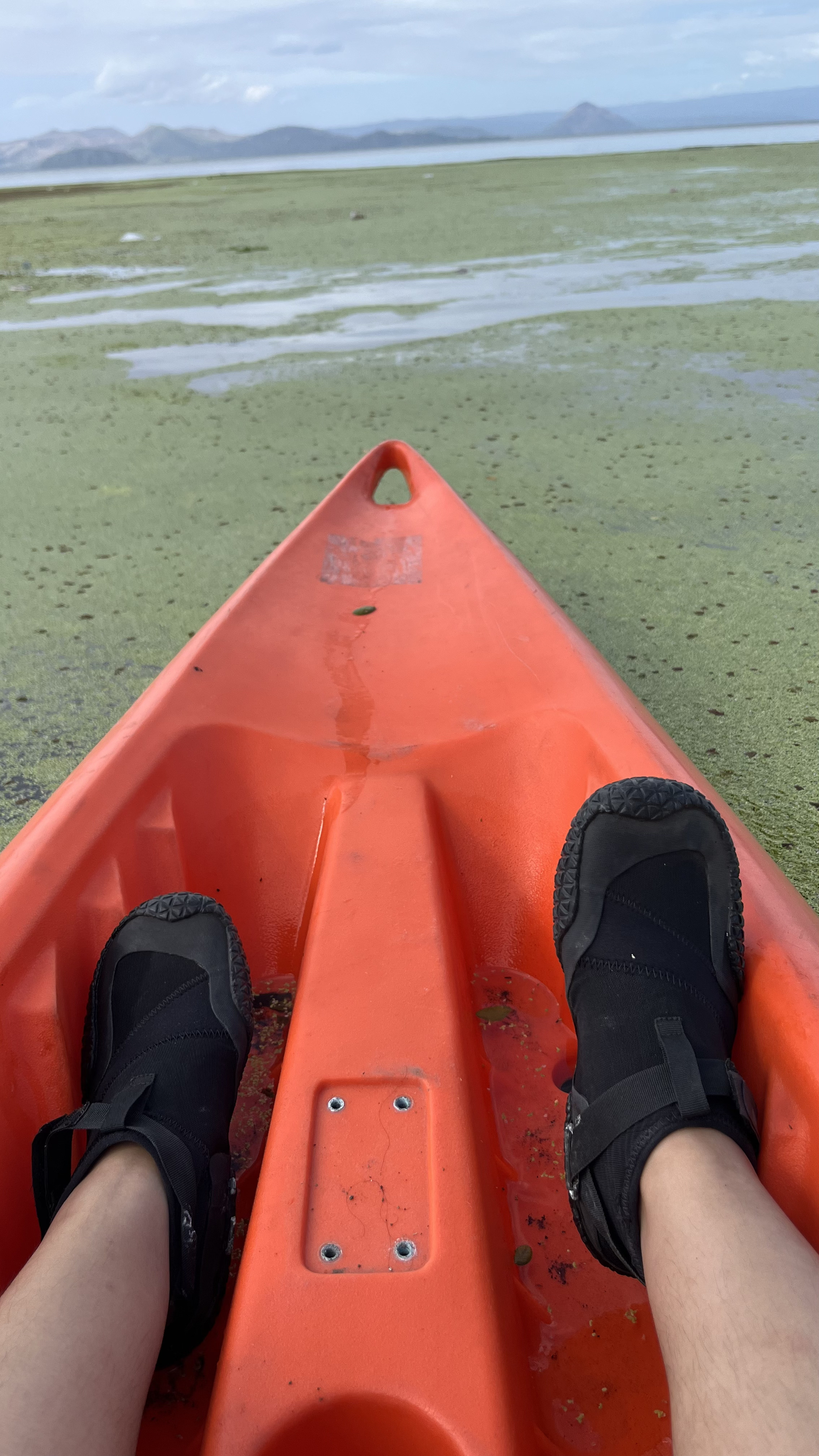
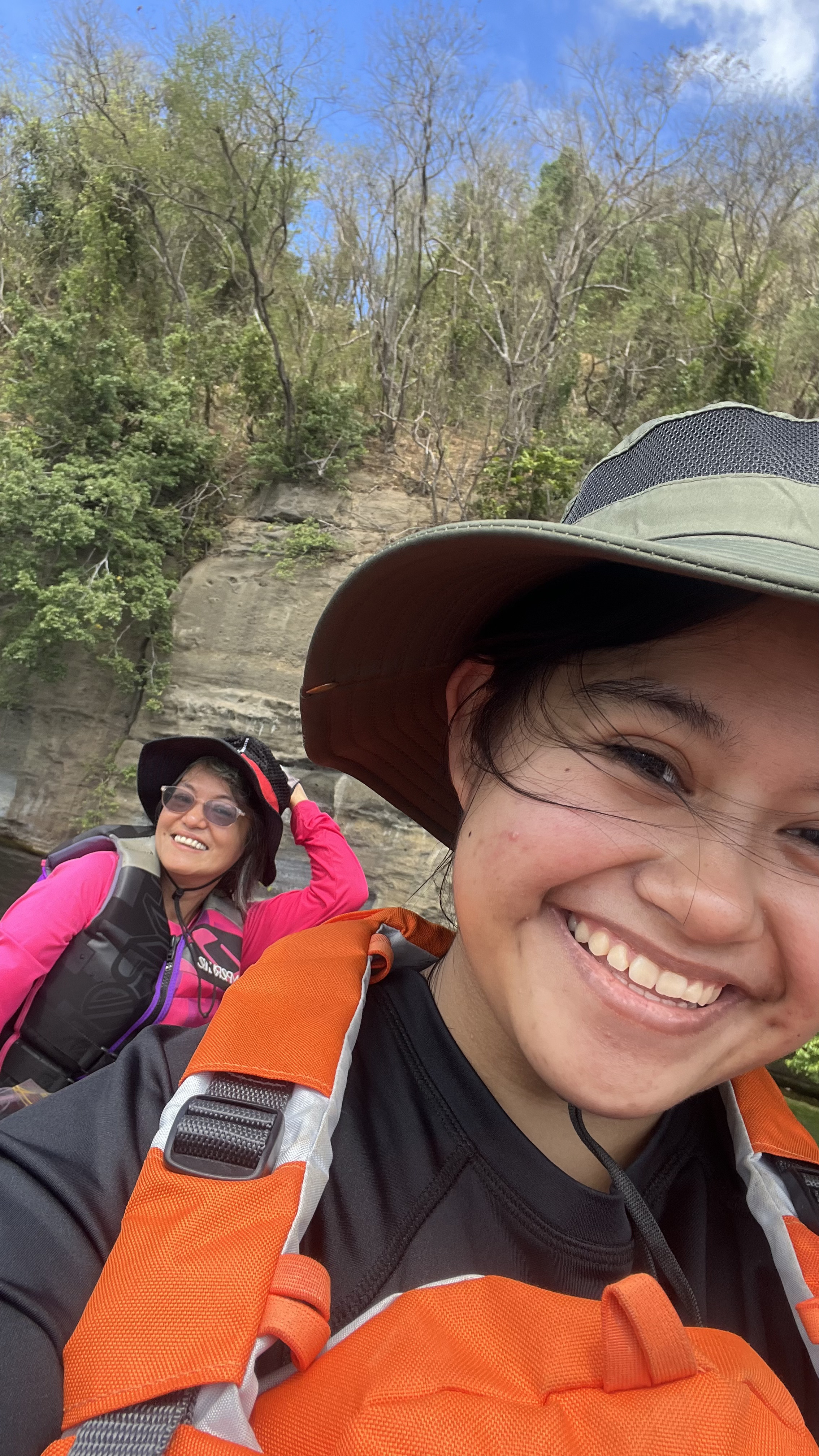
Photos: Sky Serafica
Community. Sometimes battling headwinds and waves feel like a lonely, isolating journey. You face fatigue by yourself. You face dehydration by yourself. You face the task of getting to an island by your own fuel and face getting home by that same fuel.
I kept looking at my daughter Sky, and my partner, trying to see where they were in relation to me. We kept track of each other, and when one seemed to tire, the stronger one at that time would paddle beside the other.
The team assigned a sweeper, in mountaineering parlance, Jun Bertulfo who stayed back to check that no one got left behind. Heading back to the mainland and free of the assignment, he practically flew even in the face of 21 km/hr headwinds.
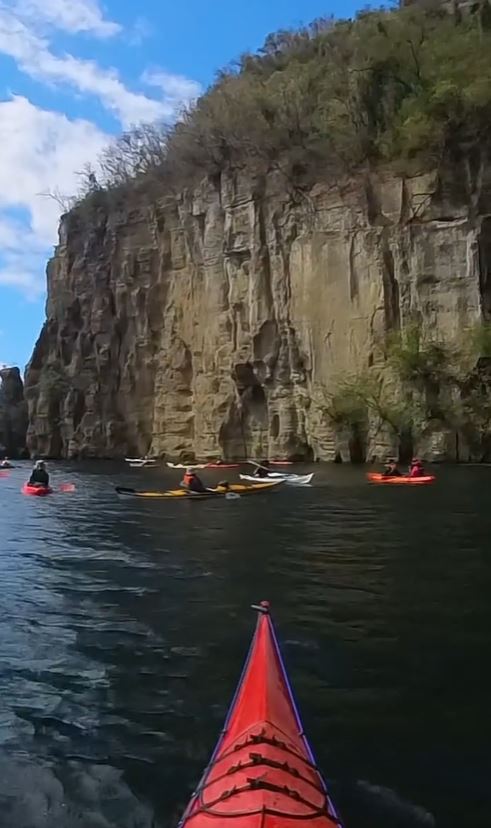
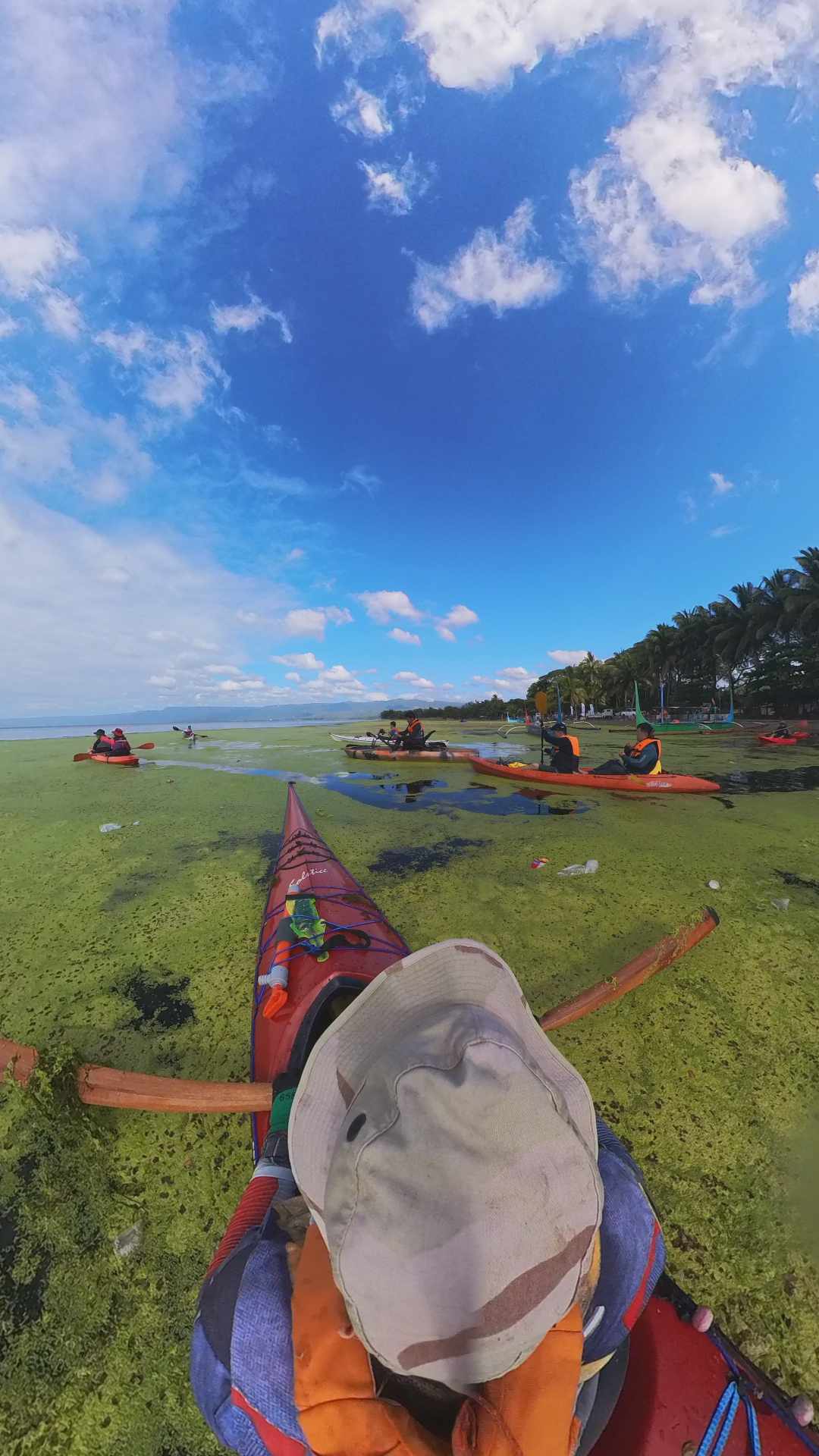
Photos: Jun Bertulfo
The lunch of tawilis (freshwater sardines that can only be found in the lake), tilapia, salted egg, adobo and rice in wooden plates with wooden utensils were cooked and served by Kayak Philippines’ rescue boat driver and his spouse.
“When you capsize,” Eli Napolitano advised, “you need to know the escape route” as Rene demonstrated. Grab that string from the kayak skirt, get out of the kayak, swim to the surface, righten the boat, get back up on that kayak by yourself, and don’t lose that paddle.
“There are only 3 rules,” Rene emphasized. “don’t panic, don’t panic, and don’t panic.”
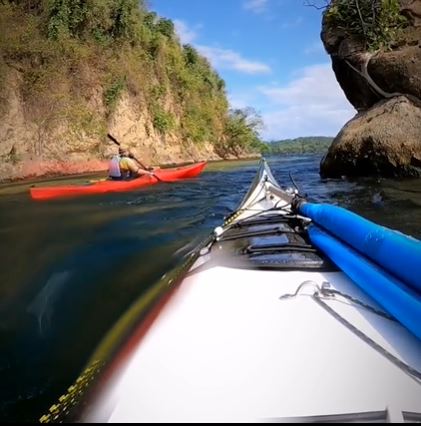
Photo grab: Eli Nepolitano
I didn’t see a sea snake or fish with jewelry. I started relaxing when we reached the sheer rock face of Nagpayong Island, which true to its name, sheltered us from the waves and wind.
I knew that unless I really wanted to be out there by myself, there will always be that one-two-three persons who will distinguish bravado from my really needing help, sometimes even before I recognize that I was drowning on dry land. WWW
 Women Writing Women