
By Diana G. Mendoza
BAGUIO CITY — A typical day for Fe Abad, a health worker in Barangay Camp 7, Baguio City, is interacting with residents during home visits and trips to the health center, although she calls her volunteer job “odd, most times difficult but joyful” because of its surprises.
“No two days are similar. One day, I may be assisting a pregnant woman on a prenatal checkup; the next day an elderly person would thank me for helping her buy her medicines and food,” she said.
Abad’s daily responsibilities have been back to normal, three years after the city went on a lockdown, like the rest of the country, starting in 2020 due to Covid-19 pandemic. Thousands of barangay health workers (BHWs) like Abad became health frontliners at the height of the pandemic.
“We roamed the desolate streets with policemen and barangay security officers while everyone was restricted in their homes,” she said. She recalled the scare of being infected and transmitting the virus to family members because of their exposure to Covid patients.

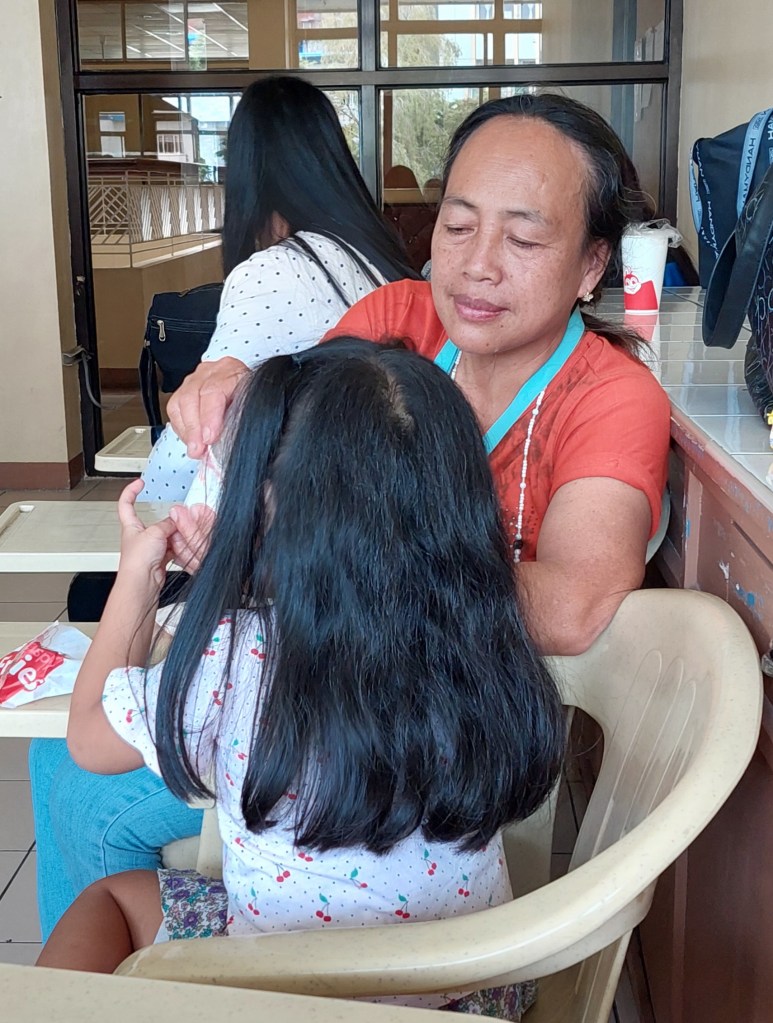
The government tapped the BHWs in house-to-house visits to provide health information about Covid-19 and carry out contact tracing because of their familiarity with village residents.
BHWs often find themselves in the first line of defense during health crisis. “We have been in the frontlines since the first day we said yes to this volunteer work,” says Abad, who shares that her list of stories and experiences becomes longer as she has been a BHW for 15 years.
Humanitarian side
What makes the BHWs’ community health work challenging is its humanitarian side.
This is why Melanie Gordo, 54, a BHW in Barangay Lower Quirino Hill also in Baguio City, calls herself and her colleagues “superwomen” because of the tasks that may not be part of their job but they have to take on somehow. She said, “on any given day, we can be anyone from midwife to nurse to hospital attendant, and we even incur out of pocket expenses to help people in need.”
“You haven’t experienced working in the so-called grassroots if you haven’t encountered people who don’t have money for transportation to a medical checkup or for paracetamol,” she lamented.


During the lockdown, Abad had to heed requests from residents to buy them rice, vegetables and cooked food, at times paying for some items in the list.
Abad receives P5,000 monthly allowance, said to be the highest rate among Baguio City’s BHWs. Gordo, a mother of three adult children, receives a much lower rate. The pay differences depend on the economic status of local government units (LGUs) and their ability to pay the health workers.
Improving primary health care
Even with their many roles, the BHWs remain the most trusted sources of information on primary health care and services and the most reliable link between the community and medical professionals.
According to a scoping study conducted by the Philippine NGO Council for Population, Health and Welfare (PNGOC), four sectors of Baguio City’s health care recipients – mothers, adult males, senior citizens and youth – acknowledge the BHWs in their distinctive roles in providing information and services on primary health care. The World Health Organization defines primary health care as the provision of services for people’s health needs throughout their lifetime – from physical to psychosocial health conditions.
The PNGOC is implementing the SIKAT sa Universal Health Care (UHC) project or Sama-samang Inisyatiba para sa Kalusugan ng Taong Bayan sa UHC that aims to reduce the gaps in primary health by establishing baseline data on the health situation of its pilot localities. The activity supports the local governments’ health systems and the Department of Health’s (DOH)’s UHC program to improve people’s health behavior.
SIKAT is a part of a three-country (Cambodia, Philippines, India) pilot project of Catalyst Management System based in Bangalore, India and funded by the Rockefeller Foundation. Baguio City is one of the project’s pilot LGUs apart from Tabaco City, Albay and Barangay Bagong Silangan in Quezon City.
In April, Abad and Gordo attended the PNGOC meetings with nearly 50 other BHWs where they listened and gave their insights to the scoping study of the city’s health situation and the challenges, as well as a communication training. Baguio City has one BHW each in its 128 barangays.
Recognizing the wonder women
Chi Laigo-Vallido, executive director of PNGOC, says “the BHWs are the greatest influencers when it comes to increasing health awareness and changing health behaviors in the communities. They did very well in strengthening people’s resolve to prevent disease and in providing the right information to be able to do this.”
Vallido says the BHWs’ presence indicates the people’s improved awareness towards hygiene and seeking medical attention when needed, dispelling unfounded fears through correct health information.


For her part, Dr. Maria Lourdes Pakoy, deputy head of the Baguio City Health Services Office, says the improved health behavior among many of the city’s nearly 400,000 population is a breather for the BHWs who struggled to deliver services during the pandemic while taking care of their own families.
“The BHWs always have the first look on patients before we see them or before they are referred to any medical person,” Pakoy said. “We know that they are overworked and underpaid. This is why we have ongoing health promotion and communication training and there’s also a move to hire them as part of the local government health staff, including nurses and midwives.”
Benefits for BHWs
The BHWs, who were introduced in the country’s health system in the mid-1980s but have remained undervalued and even unrecognized, have become the concern of legislators.
In the Senate, the proposed Magna Carta for BHWs provides for security of tenure in conferring a first-grade Civil Service Eligibility to a BHW who has rendered at least five years of service as a community health worker. Legislators say this measure would be an improvement from Republic Act 7883, or “The Barangay Health Workers’ Benefits and Incentives Act of 1995” that considers BHWs only as volunteers.
The pending measure also aims to “de-politicize” their employment in some LGUs because they can be terminated on the whim of politicians who think they don’t have the support of the BHWs.
Under the bill, the DOH is directed to maintain a national registry of BHWs entitled to receive the new set of economic incentives and benefits.
The DOH estimates that there are 375,000 BHWs across the country, 90 percent of whom are women and mothers. The numbers and the gender issue should make the bill even more urgent because the government have exploited these women’s emotional and physical labor in the last 20 years.
 Women Writing Women